
Technology saves fawns’ lives
Non classé
23 June 2016
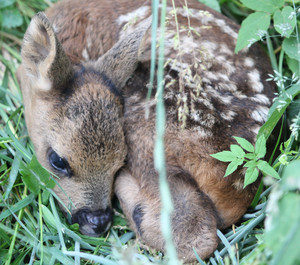
The Bern University of Applied Sciences has developed a heat-seeking drone that uses thermal imaging to detect fawns nestled in fields that are due to be mown by farmers. Deer often hide their offspring in tall grass to protect them from natural predators. The fawns instinctively stay exactly where they are placed, which makes it […]
The Bern University of Applied Sciences has developed a heat-seeking drone that uses thermal imaging to detect fawns nestled in fields that are due to be mown by farmers.
 Deer often hide their offspring in tall grass to protect them from natural predators. The fawns instinctively stay exactly where they are placed, which makes it very hard for farmers to spot them, leading to horrible accidents. According to the Swiss Animal Protection, over 2,000 fawns are shredded every year by combine harvesters during harvesting season.
The School of Agricultural, Forest and Food Sciences of the Bern University of Applied Sciences (BFH-HAFL) has developed a drone equipped with a thermal camera that can effectively detect the young animals hiding in the fields and alert farmers doing spring mowing. The drone flies over the surface to be mown and transmits the image to a screen on the ground in real time. The fawns, whose temperature is warmer than that of the grass, appear as light-colored patches on the image. Once the drone’s survey is complete and the coordinates of all the pale spots have been determined, rescuers run out into the fields and place a basket over each animal. This allows farmers to mow the surrounding area with a clear conscience. The fawn is then released back to its mother.
Thanks to this new technology, some 80 fawns have been rescued by the HAFL team since 2012.